


Dole Manor Park &
Open-Air Museum
Dole Manor Park is a masterpiece of landscape art, founded in 1776. Over more than 200 years, it has evolved into a beautiful nature sanctuary on the banks of the "Dry Daugava" (Sausā Daugava) river, combining historic landmarks, rare natural values, and open-air heritage.


"Mellupi" Open-Air Fisherman’s Farmstead
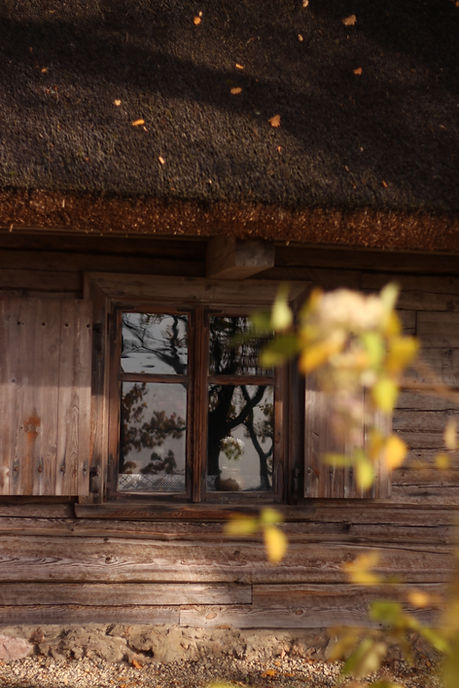
Step back in time to a 19th-century river fisherman’s world. The "Mellupi" Open-Air Fisherman’s Farmstead is located within the historic Dole Manor park. This open-air exhibition reflects the life and work of Lower Daugava fishermen during the late 19th and early 20th centuries.
The farmstead consists of four authentic buildings and a unique, full-scale reconstruction of historical wooden structures once used for salmon and lamprey fishing (weirs).
The residential house and granary were relocated to the museum from the "Mellupi" homestead on Zirņu Island, while the barn/stable and sauna came from other neighboring farms.
The buildings showcase traditional construction techniques, household items, and tools of the era:
The Farmhouse (built in the 19th century)
The Granary, Barn, and Sauna
Features a historic interior of a fisherman's family home, including a traditional lamprey-roasting oven, dishes, and daily necessities such as spinning wheels, looms, irons, butter churns, and textile-making tools.
The Granary: An 18th-century building originally used for storing grain and essential household provisions.
The Barn: Now housing a specialized exhibition on historical fishing heritage, featuring traditional nets, an authentic dugout canoe, and unique Daugava fishing tools like kvoks (catfish caller) and žebērklis (traditional fish spear).
The Sauna: A traditional 19th-century bathhouse.
The Weirs
A full-scale reconstruction of historical salmon and lamprey fishing structures.
The Fishing Heritage Exhibition
Housed in the farmstead’s barn, this exhibition is dedicated to the primary livelihood of Dole Island – fishing.
Visitors can learn about:
-
Net fishing, net weaving, and winter fishing traditions.
-
Traditional boat making: Featuring an authentic dugout canoe.
Historical Fishing Tools:
discover a vast collection of specialized gear used on the Daugava, including traditional fish spears (žebērklis), net needles, hooks, and sounding tools (kvoks) used for catching giant catfish.
Nature & Park Landmarks

Dole Island Dolomite Outcrop
A protected national natural monument—one of the last remaining 3–4 meter high natural dolomite cliffs showing the river's original banks.

The European Union Linden
Planted by the former President of Latvia, Vaira Vīķe-Freiberga, on May 1, 2004, to celebrate Latvia’s accession to the EU.

Historic Trees
Discover the Grand Oak (4m circumference), the Grand Maple (3.7m), the European Beech, and the historic remains of the 450-year-old Dole Great Oak.

A botanical collection
Discover the Grand Oak (4m circumference), the Grand Maple (3.7m), the European Beech, and the historic remains of the 450-year-old Dole Great Oak.
Historic Trails
The Obelisk
A 19th-century memorial to the von Löwis of Menar family, connected by a historic linden alley that blooms with rhododendrons in spring.


Scenic Walking Paths
Trails along the river leading to a moving memorial dedicated to the houses lost during the flooding of the Riga Hydroelectric Power Plant (HES).
Temporary Open-Air Exhibitions
Throughout the park, you can find outdoor exhibitions covering history, photography, and museum artifacts that change regularly.

